Four numbers you should know for your health
August 10, 2026Categories: Heart Care, Wellness and Prevention
Overview: Here are four numbers you should know to help understand your overall health and wellness.
Knowing how your body works is the first step to living a healthy life. Your overall wellness is greatly impacted by your lifestyle choices, which means small changes can create a big difference.
Knowing these four numbers will give you a good barometer on your overall health:
Blood pressure
Blood pressure is the force of blood flowing through your blood vessels. A normal blood pressure level is important to keep blood moving throughout your body, but high blood pressure means your heart’s working too hard and causing long-term damage, such as heart disease.
Take our free heart health risk assessment
Your blood pressure is decided by two numbers: systolic and diastolic pressure.
- Systolic blood pressure, the top number, measures the force your heart pushes on your artery walls each time it beats.
- Diastolic blood pressure, the bottom number, measures the force your heart pushes on your artery walls between beats or at rest.
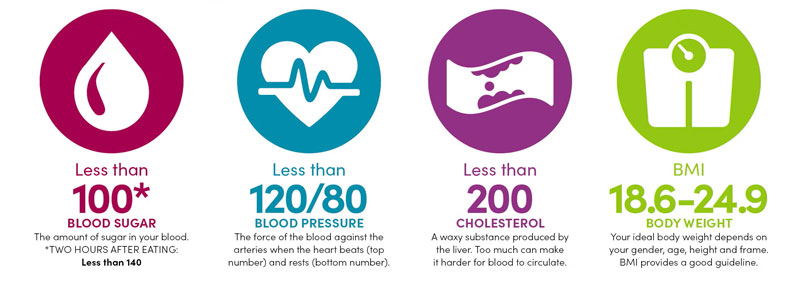
- An ideal blood pressure is 120/80.
To help manage your blood pressure without medication, it’s important to
- Exercise.
- Eat a healthy diet.
- Manage stress.
- Get plenty of good sleep.
- Limit alcohol consumption.
- Stop smoking.
Blood sugar
An important number to know is your blood sugar, because it’s vital to creating energy to fuel your brain, muscles and heart. When your blood sugar is too high, it can mean a lack of insulin or insulin resistance, where the body can’t effectively move glucose from the bloodstream into the cells. Your blood sugar can be checked with an A1C test that looks at your average blood sugar level over the past three months.
A normal blood sugar level is less than 100 or less than 140 two hours after eating. If your numbers are consistently high, you may have pre-diabetes or diabetes, which is why it’s important to check your blood sugar.
Take our free diabetes health risk assessment
Cholesterol
Cholesterol is a waxy substance produced by the liver and isn’t inherently bad. Circulating through your blood, cholesterol is needed by your body to help build cells and create vitamins and hormones.
There are two types of lipoproteins that carry cholesterol through your blood, LDL and HDL.
- Low-density lipoprotein (LDL) carries cholesterol to your body’s arteries and tissues. However, excess LDL forms hard plaques that narrow arteries, which put you at risk for a heart attack or stroke.
- High-density lipoprotein (HDL) absorbs extra cholesterol and takes it to the liver, helping to clear excess cholesterol out of your arteries and bloodstream. A higher HDL helps lower your risk of heart disease.
An ideal LDL number is below 100, and an ideal HDL is 40 or higher for men and 50 or higher for women. An overall healthy cholesterol level is below 200.
Take our free stroke health risk assessment
BMI
Body Mass Index (BMI) gives an approximate measurement of your body fat based on height and weight. BMI measurement isn’t the gold standard to determine your health, but it’s a good guideline to start looking at your overall wellness. Your BMI is determined by your gender, age, height and frame. On average, a healthy BMI range for adults is 18.6-24.9.
Making positive lifestyle choices for yourself can help to keep your numbers – blood pressure, blood sugar, cholesterol and BMI -- in a healthy range. You can make small changes that will have an impact:
- Monitor the added sugar in your foods.
- Move your body every day.
- Quit smoking.
- Limit alcohol consumption.
- Don’t miss your yearly cancer screenings and wellness visits.
- Take time for your mental health.
- Practice healthy coping mechanisms when you’re stressed.
Make an appointment with your primary care provider today to learn your numbers and begin your path to better health.
This blog was medically reviewed by a MercyOne provider.